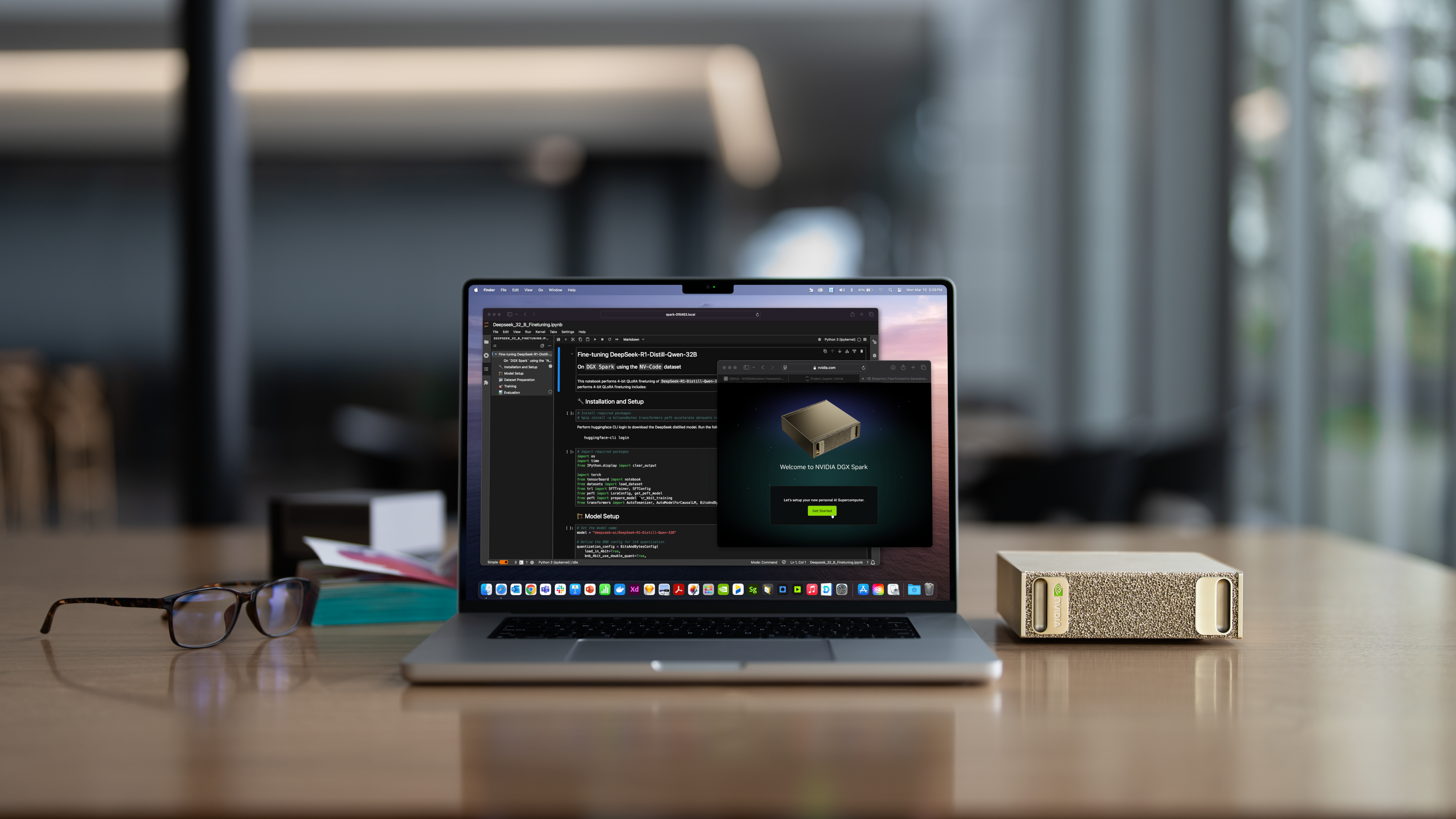
A FLUX LoRA training application running on the NVIDIA DGX Spark. Upload a dataset of images, configure training parameters like steps, learning rate, and rank, and fine-tune FLUX image generation models through an intuitive Gradio interface.
Trained models can be exported and used for custom image generation workflows. The trainer supports various dataset formats, automatic captioning, and real-time training progress monitoring with loss curves.
Built for the Stillion & Board collaboration, training custom LoRAs on artistic styles to generate new works that extend the visual language of the source material.
Gallery
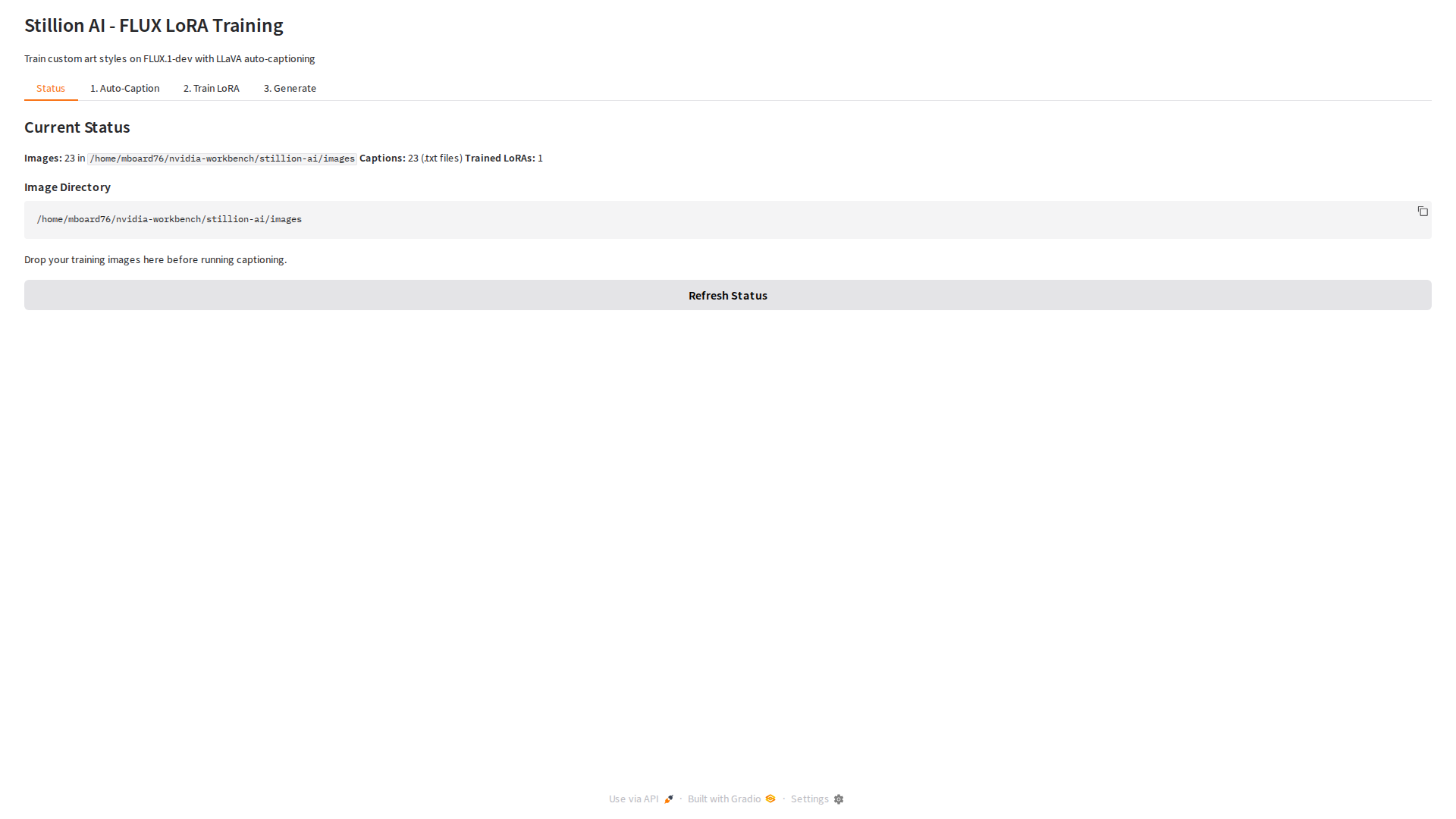
Stillion AI - Training Interface
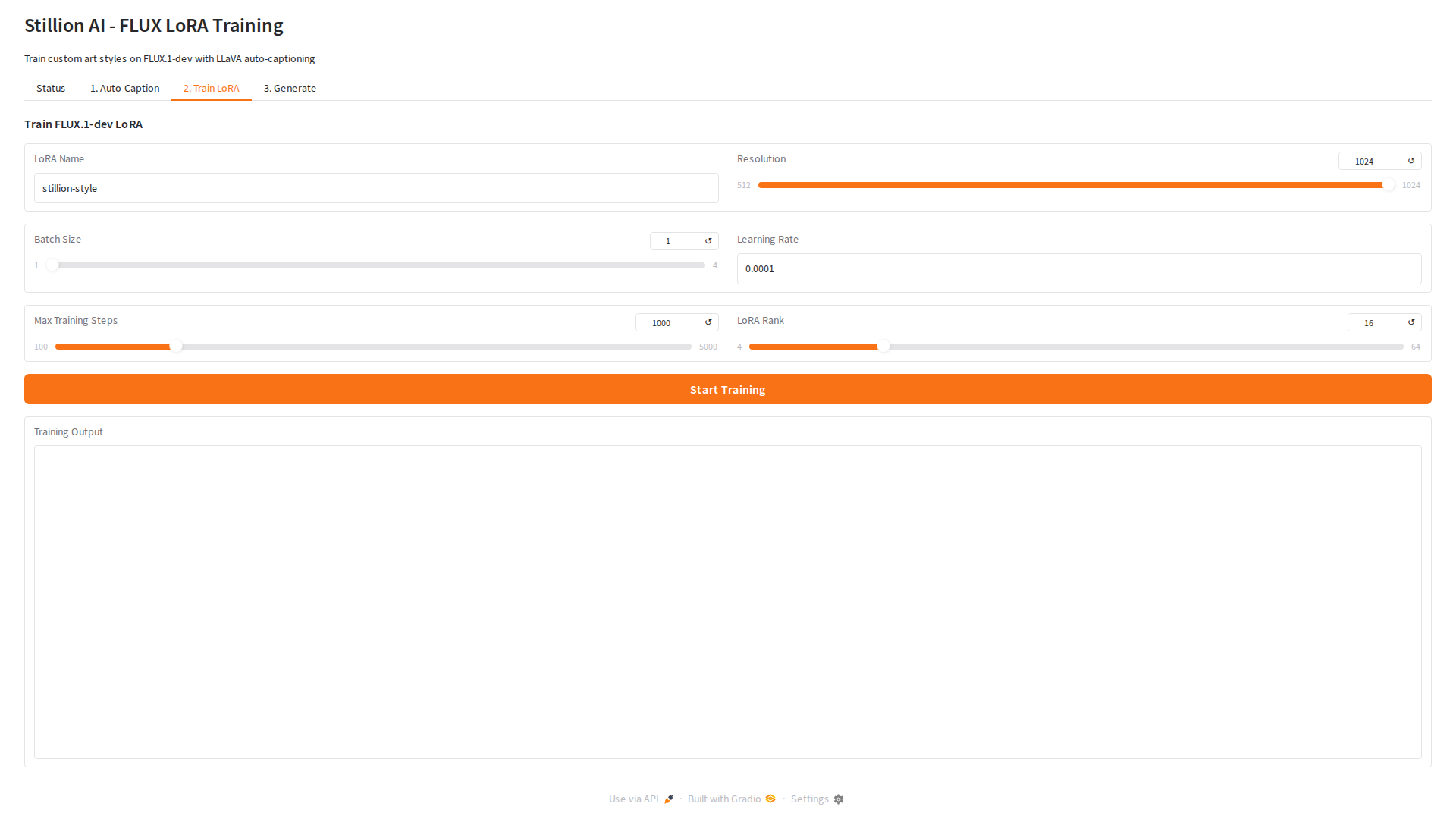
Stillion AI - Training Progress
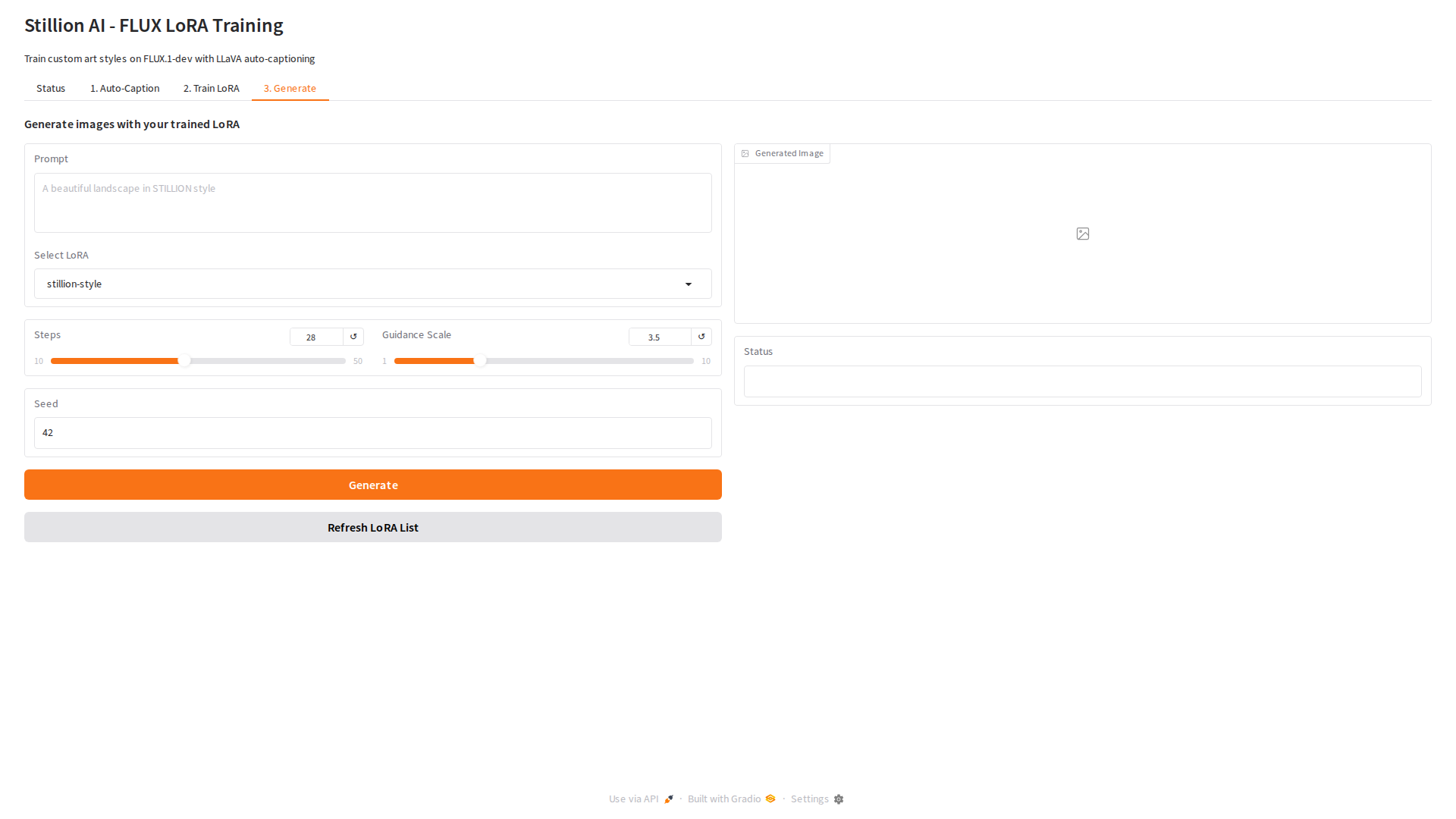
Stillion AI - Generation Interface
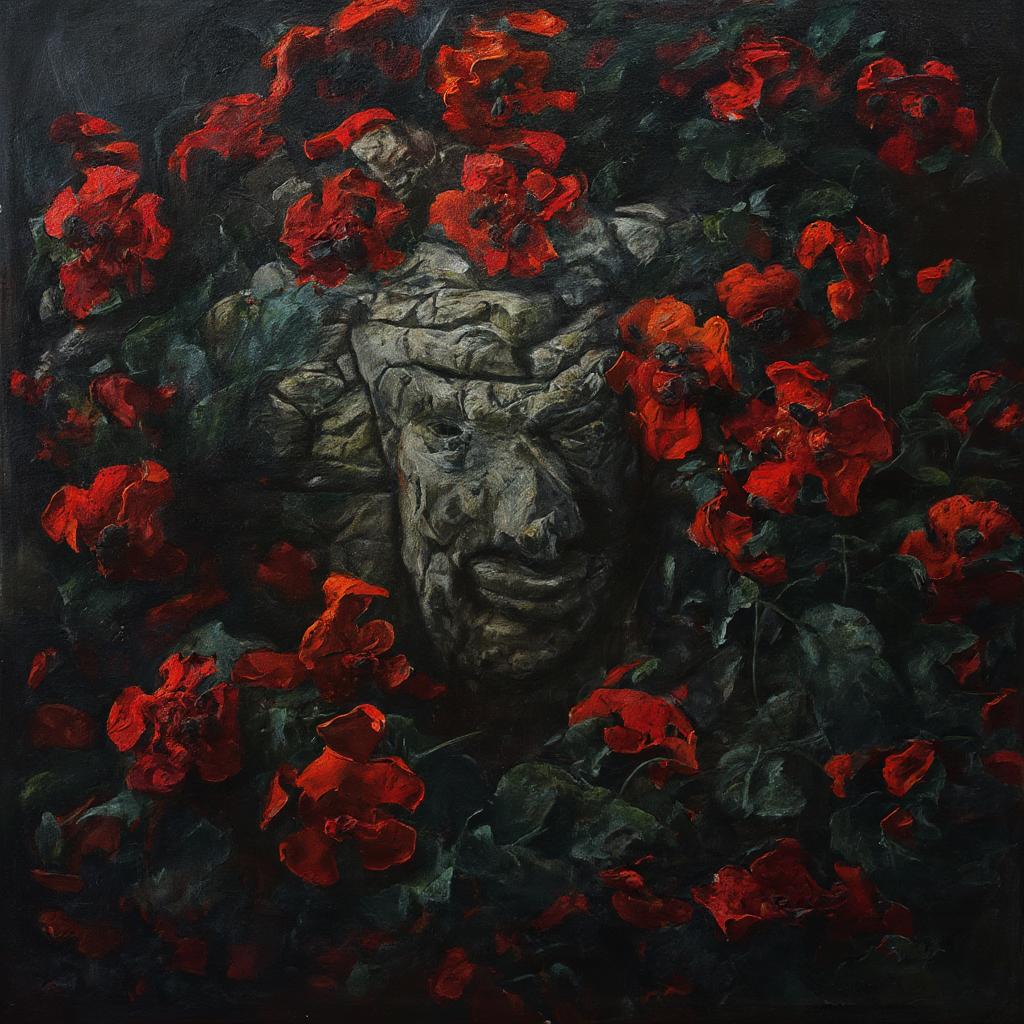
Stillion AI - Generated Sample 1
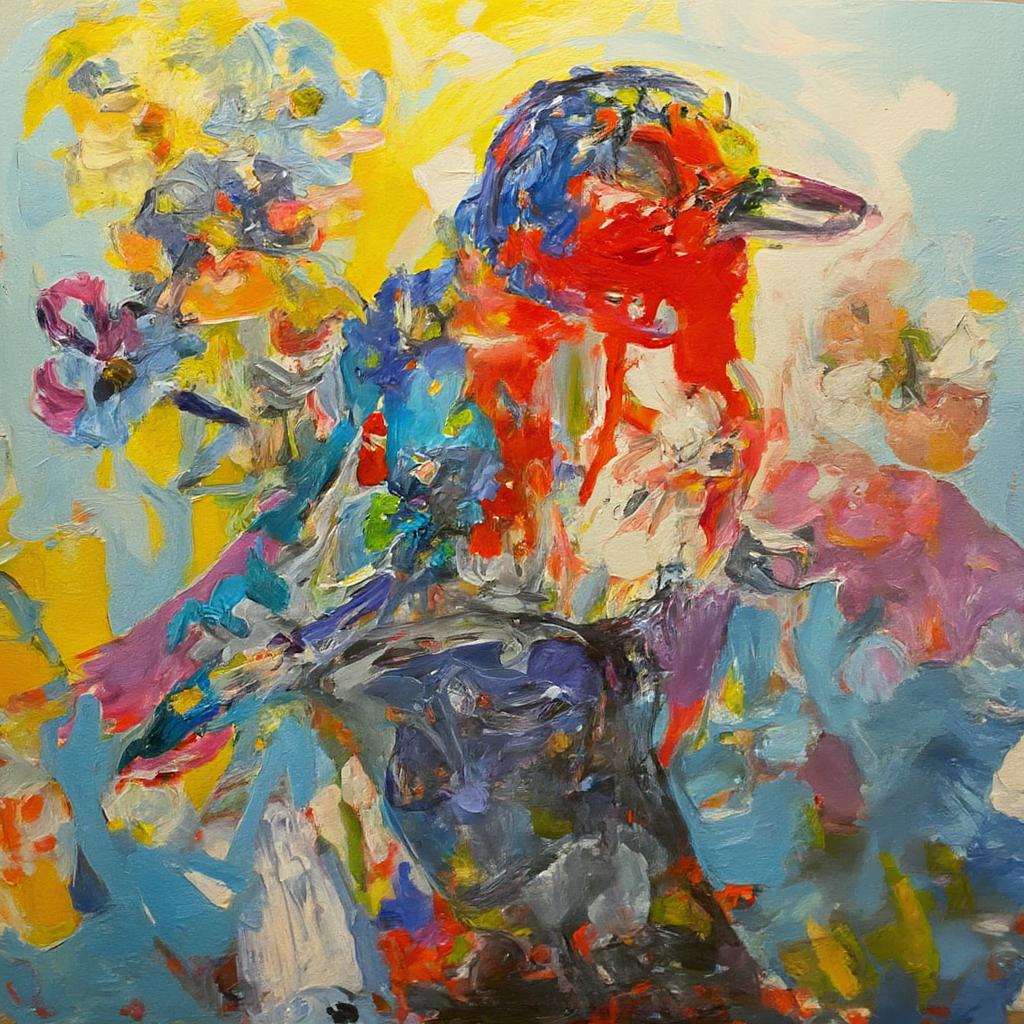
Stillion AI - Generated Sample 2
Case Study
The Problem
Painter Michael Stillion wanted to extend his visual language into AI-generated media for a gallery installation at the Contemporary Arts Center, Cincinnati. But LoRA training requires ML expertise (dataset curation, hyperparameter tuning, checkpoint evaluation) that a fine artist shouldn't need to learn. Existing training UIs assume technical users and expose every parameter without guidance.
Design Challenge
How do you translate artistic judgment into model training decisions? A painter knows when a generated image 'feels right' but doesn't know what learning rate or LoRA rank means. The interface needs to let the artist drive the aesthetic while the system handles the ML.
Key Design Decisions
I designed the workflow around three artist-friendly stages: curate (drag-and-drop image selection with auto-captioning), train (simplified controls with sensible defaults, where the artist adjusts a 'style strength' slider instead of LoRA rank), and evaluate (side-by-side comparison of checkpoint outputs against the original paintings). Training progress shows loss curves but also periodic sample generations so the artist can see the model learning their style in real time. The system auto-saves checkpoints at intervals so the artist can pick the version that best captures their intent.
Outcome
The trained model powered a large-scale video installation at the Contemporary Arts Center, Cincinnati. Stillion was able to generate hundreds of variations extending his painting style into new compositions: poppies, face jugs, and houseflies rendered in his distinctive mark-making, all without writing a single line of code or understanding the underlying ML.
System Architecture
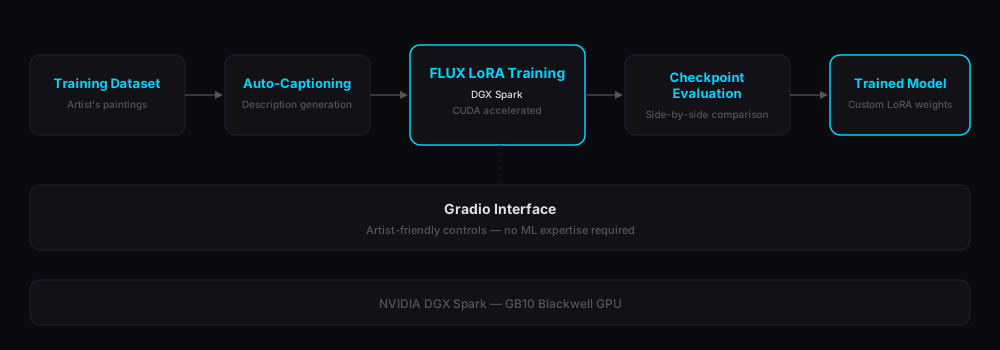
Technical Highlights
Guided Training Workflow
Three artist-friendly stages: curate images with drag-and-drop and auto-captioning, train with simplified controls and sensible defaults, and evaluate with side-by-side checkpoint comparisons.
Real-Time Progress
Loss curves and periodic sample generations during training so the artist can watch the model learning their style. Auto-saved checkpoints at intervals for picking the best version.
DGX Spark Native
Runs locally on NVIDIA DGX Spark with full CUDA acceleration. No cloud dependency, all training data stays on-device. Gradio interface accessible over the local network.