LoRA-Generated Exhibit Concepts to 3D Gaussian Splats
Machina Prima
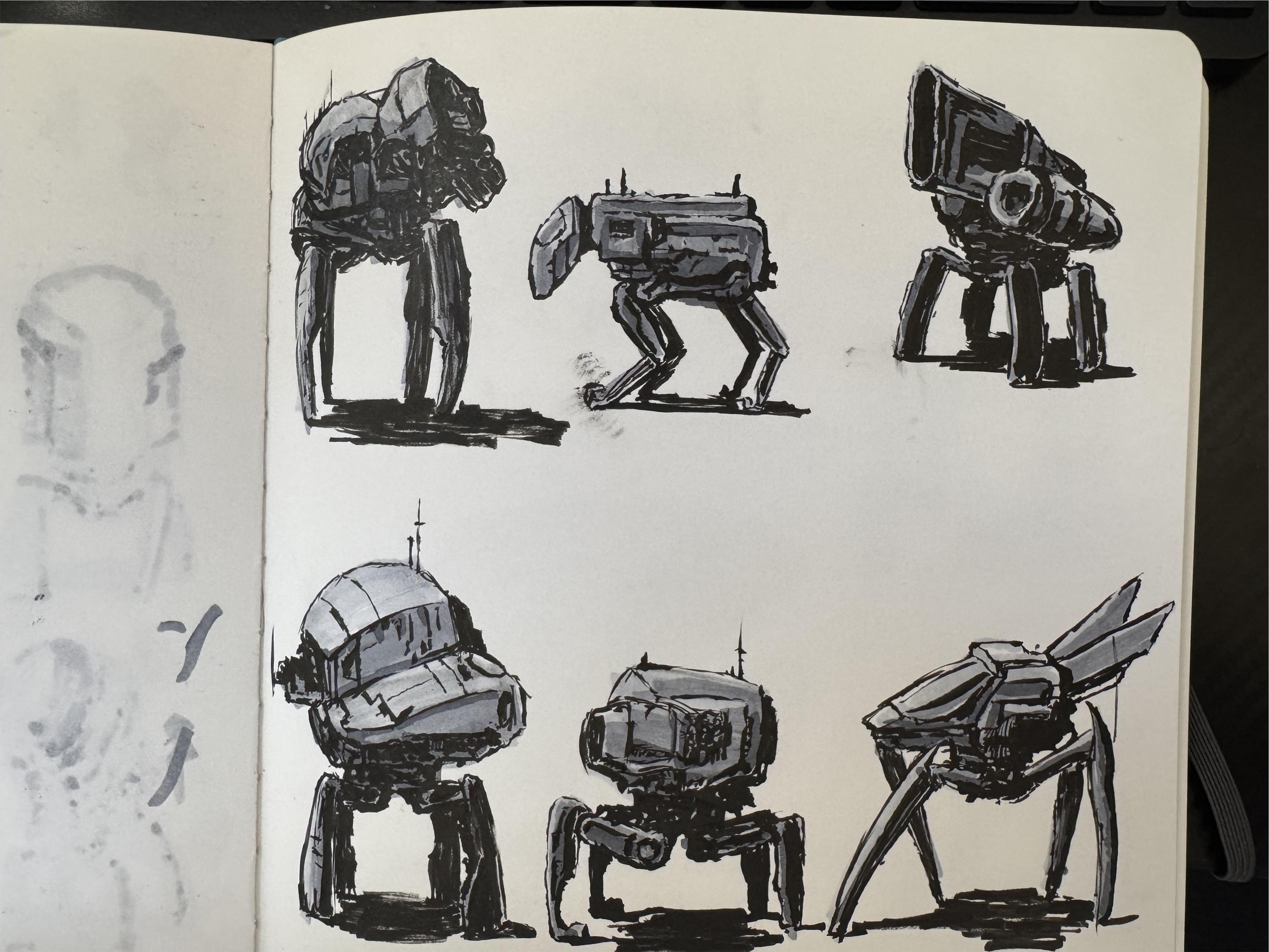
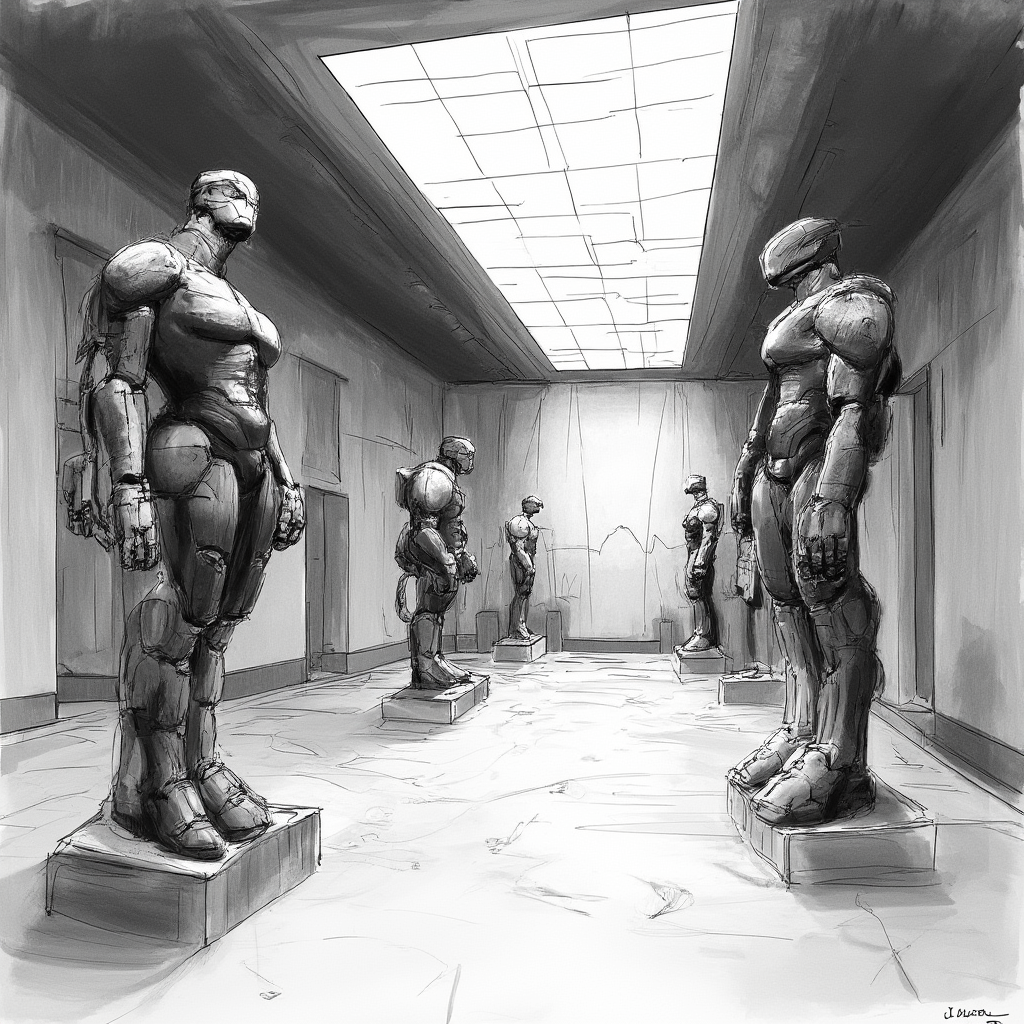
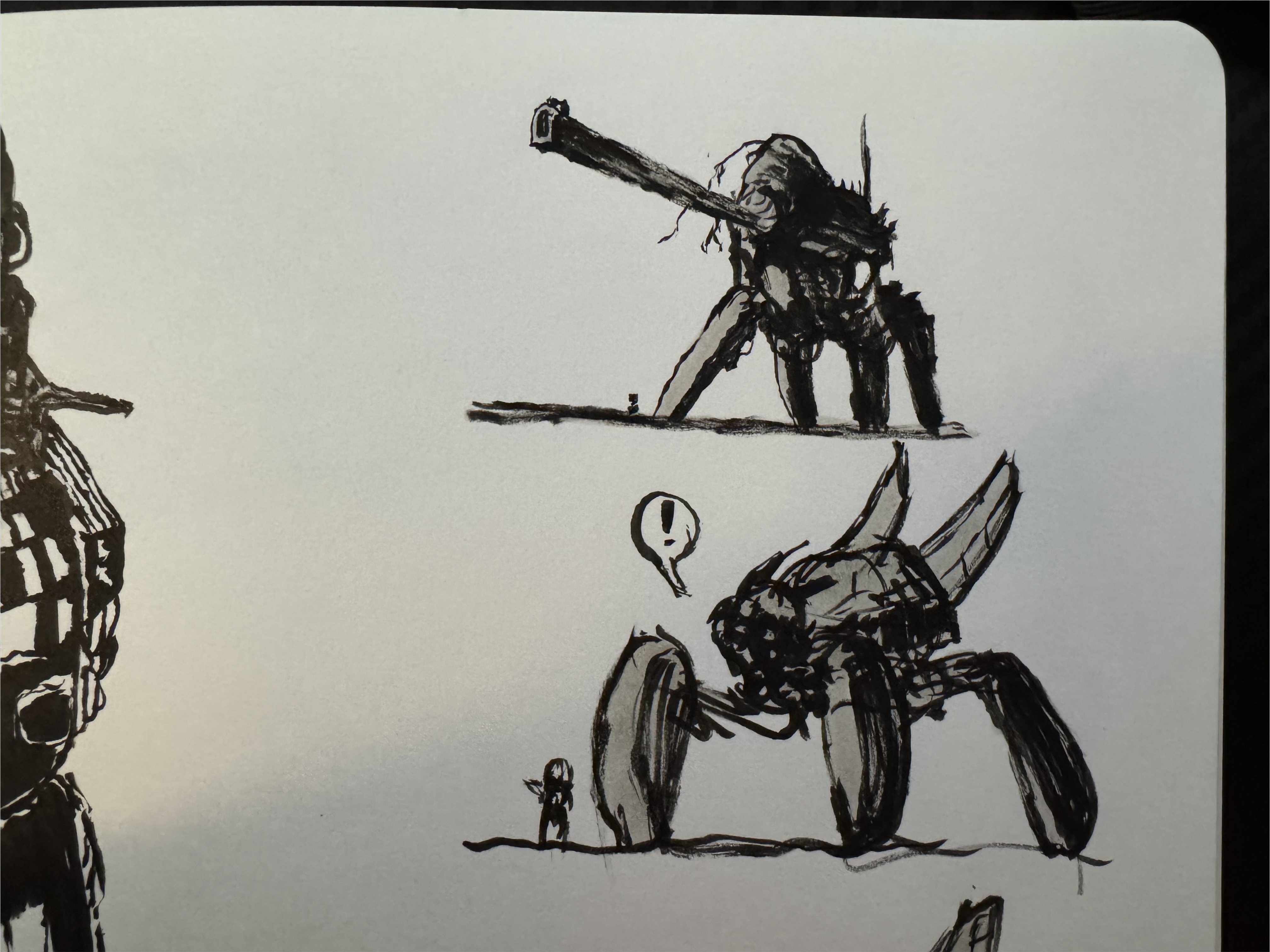
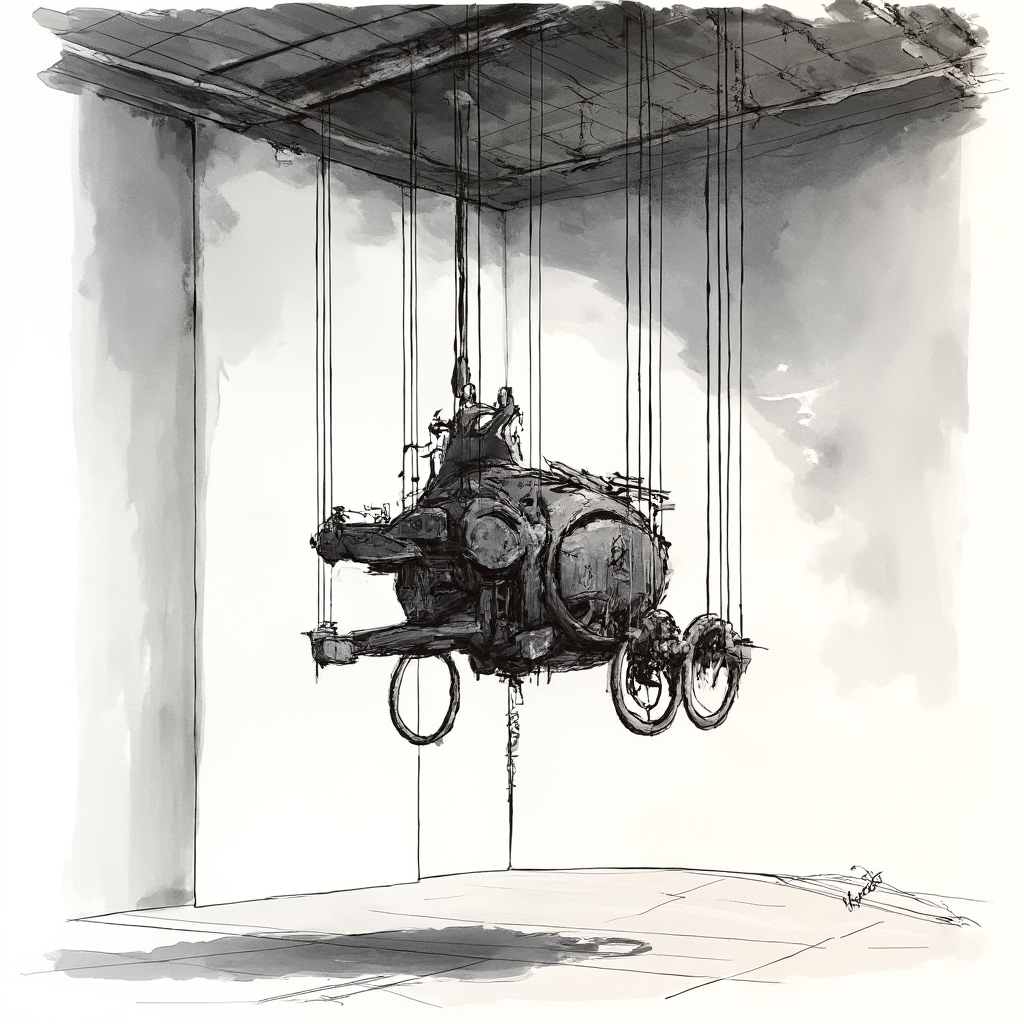
An exhibit concept series generated using a custom marker-mech LoRA trained on 15 hand-drawn mechanical sketches. The model learned the marker rendering style and was prompted to envision spaces for a futuristic art exhibition, from gallery entrances and sculpture halls to immersive projection rooms.
Each of the 11 generated rooms was then converted into a pro-quality 3D Gaussian splat via the World Labs API, auto-cleaned to remove floaters, ghost splats, and blob artifacts. The result is a fully navigable virtual exhibition space.
The project bridges traditional hand-drawing with AI image generation and advanced 3D reconstruction, starting from pen-on-paper sketches, through LoRA fine-tuning, to explorable 360° panoramic environments.
Exhibition Rooms
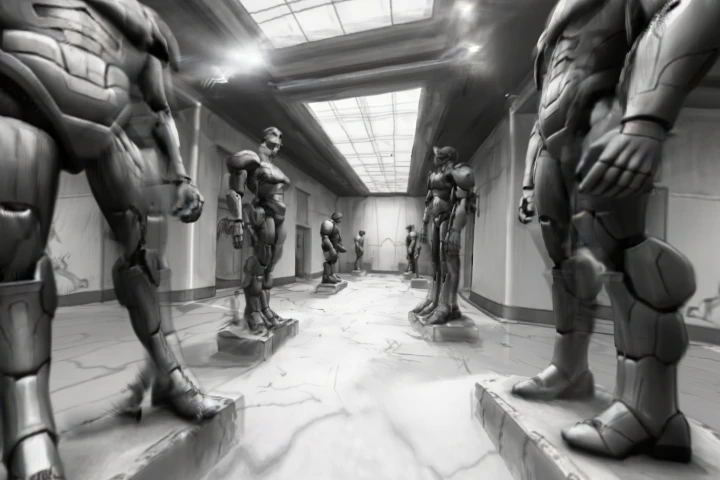
Sculpture Hall
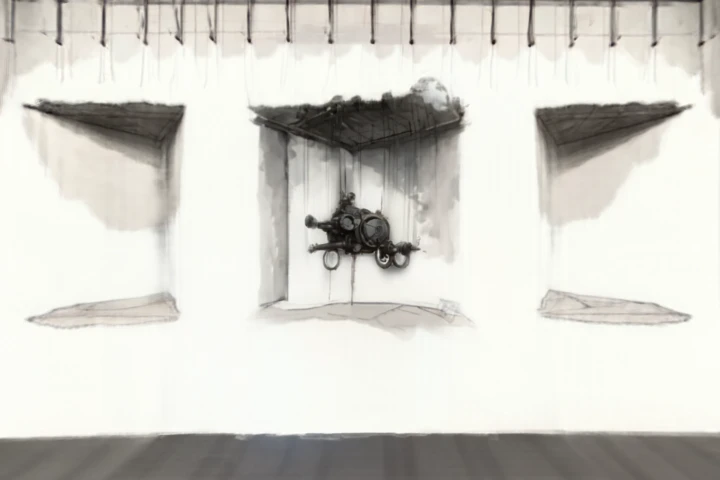
Suspended Installation
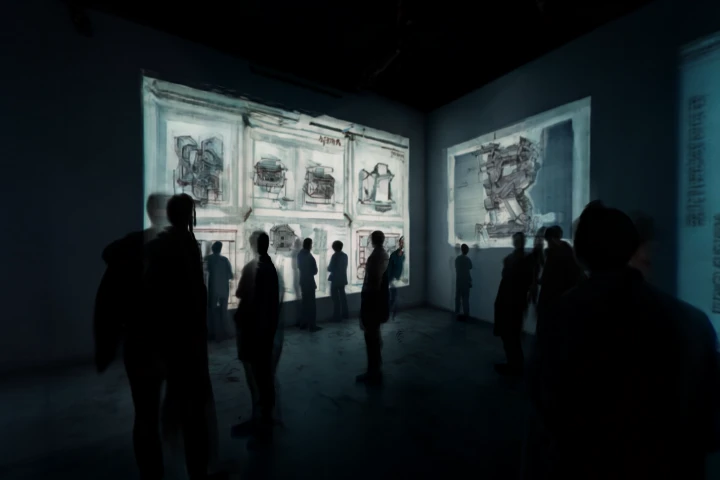
Projection Room
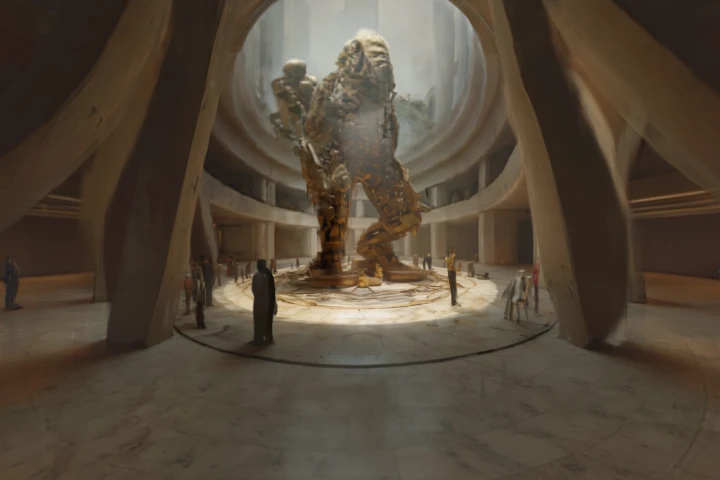
Rotunda Centerpiece
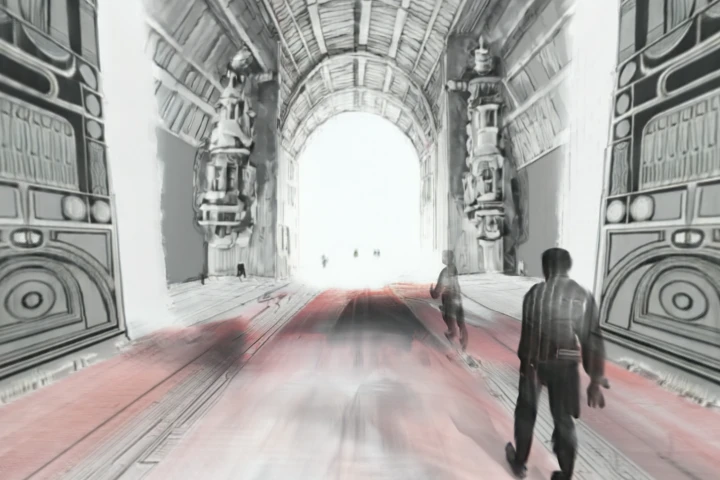
Grand Entrance
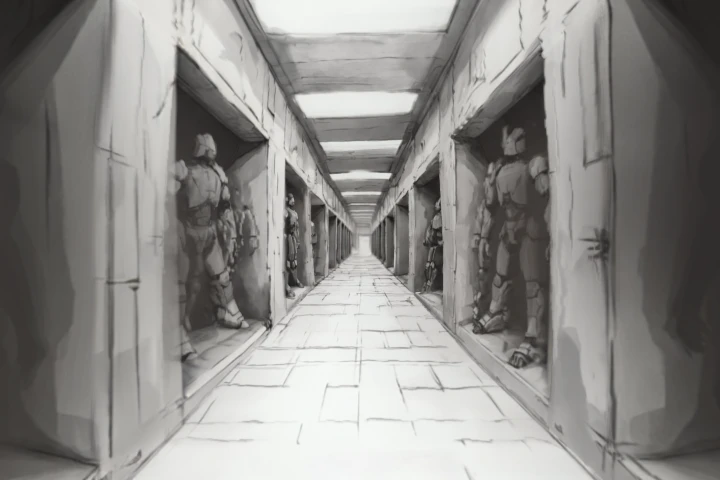
West Corridor
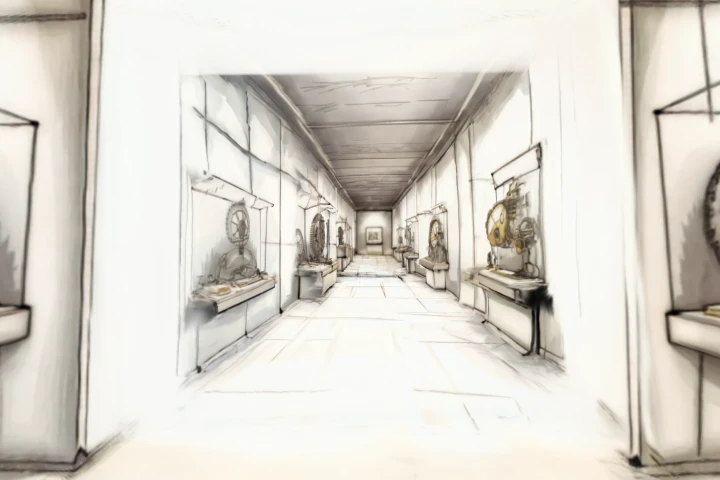
East Corridor
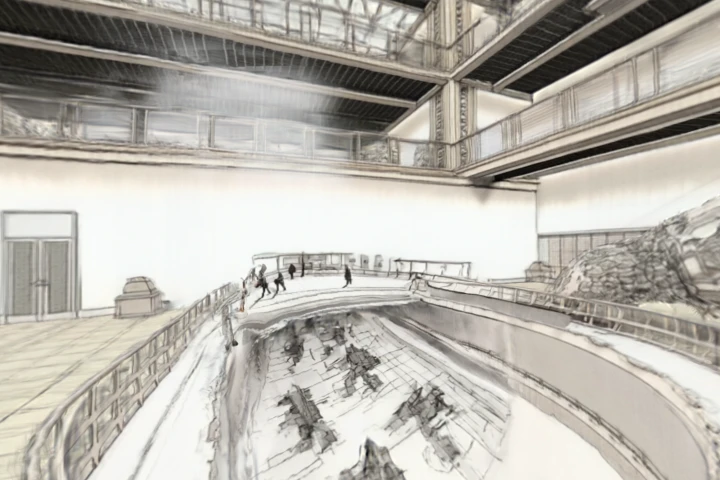
Observation Deck
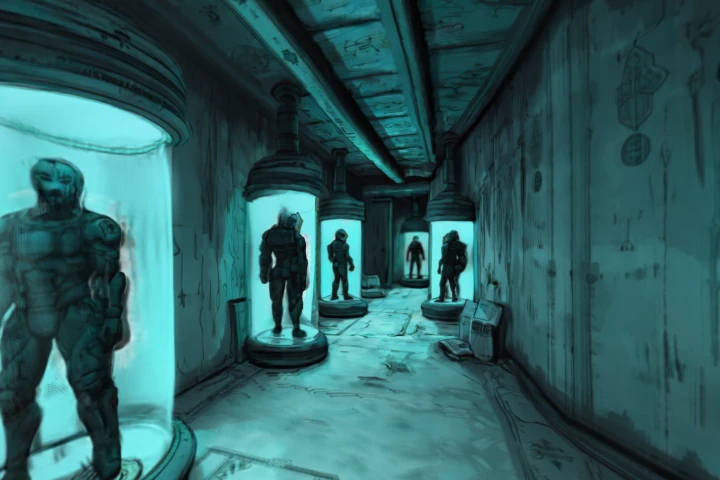
Underground Vault
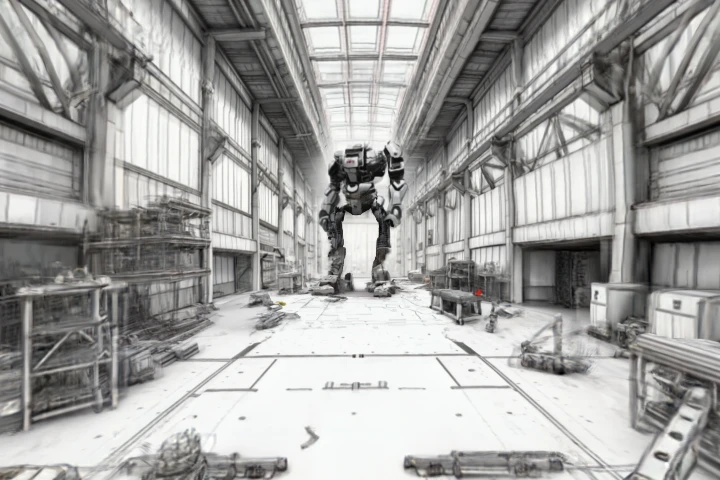
Assembly Hall
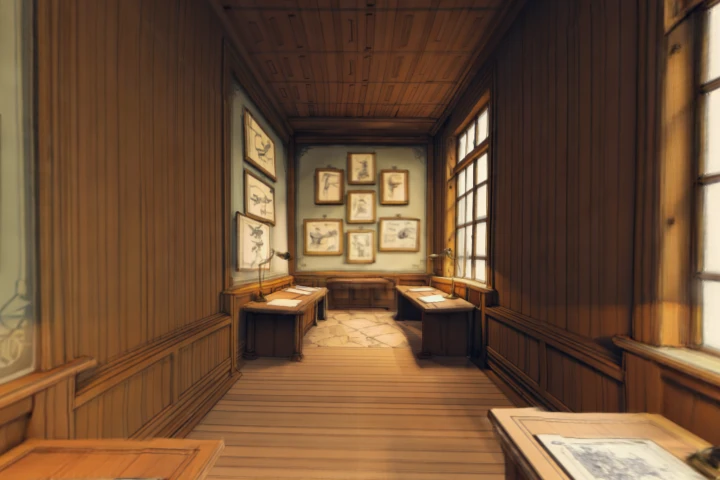
Archive Room
Case Study
The Problem
There's no established pipeline from hand-drawn concept art to navigable 3D space. Architects and exhibit designers sketch ideas on paper, but translating those sketches into spatial experiences requires 3D modeling, texturing, lighting, and environment design. That is weeks of work per room. AI image generation can produce photorealistic interiors from text, but they're flat images. And converting 2D images to 3D has been either low-quality (NeRF artifacts) or prohibitively expensive (manual modeling).
Design Challenge
How do you preserve the artistic intent of hand-drawn sketches through a multi-stage AI pipeline (from ink on paper to LoRA training to image generation to 3D reconstruction) without the output becoming generic? Each stage introduces its own biases and failure modes. The LoRA can overfit or lose the style. The image generation can ignore spatial logic. The Gaussian splatting can produce floaters and ghost geometry.
Key Design Decisions
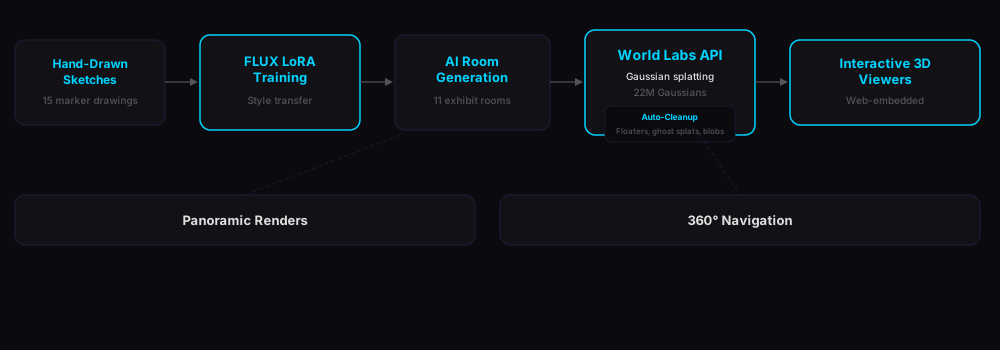
The pipeline was designed as a series of human checkpoints rather than a fully automated chain. The LoRA was trained on just 15 hand-drawn mechanical sketches, small enough to preserve the specific marker rendering style rather than averaging it into something generic. Each of the 11 rooms was generated individually with prompts that described spatial function (sculpture hall, projection room, observation deck) so the AI had to solve real architectural problems, not just produce pretty images. The Gaussian splats via World Labs API were auto-cleaned to remove floaters and blob artifacts, then rendered as navigable 360° panoramas. Embedding interactive 3D viewers directly on the project page lets visitors experience the spaces rather than just look at screenshots.
Outcome
11 navigable exhibition rooms generated from pen-on-paper sketches, each converted to a 22-million-Gaussian 3D environment. The project demonstrates a complete concept-to-spatial pipeline: hand-drawn input → AI style transfer → architectural image generation → 3D reconstruction → interactive web experience. The entire process, from first sketch to explorable 3D museum, took days, not months.
System Architecture
Interactive 3D Environments
Click a room to explore the Gaussian splat in 3D. WASD to move, drag to look, scroll to adjust speed.
Technical Highlights
Custom LoRA Training
FLUX LoRA trained on just 15 hand-drawn mechanical sketches. The small, focused dataset preserved the specific marker rendering style rather than averaging it into generic output.
3D Gaussian Splatting
Each generated room converted to a 22-million-Gaussian 3D environment via the World Labs API. Auto-cleaned to remove floaters, ghost splats, and blob artifacts for navigable quality.
Interactive Web Viewers
Gaussian splats embedded directly on the project page as interactive 3D viewers. WASD navigation, mouse look, scroll speed. Visitors experience the spaces, not just screenshots.
Panoramic Renders
HDR panoramic renders extracted from the Gaussian splats for flat display. Full 360° coverage of each exhibition room for contexts where interactive 3D isn't available.
Training Data vs Output
Hand-drawn marker sketches used as LoRA training data (left) and the AI-generated exhibit concepts they produced (right).
SKETCH
GENERATED - SCULPTURE HALL
SKETCH
GENERATED - SUSPENDED INSTALLATION
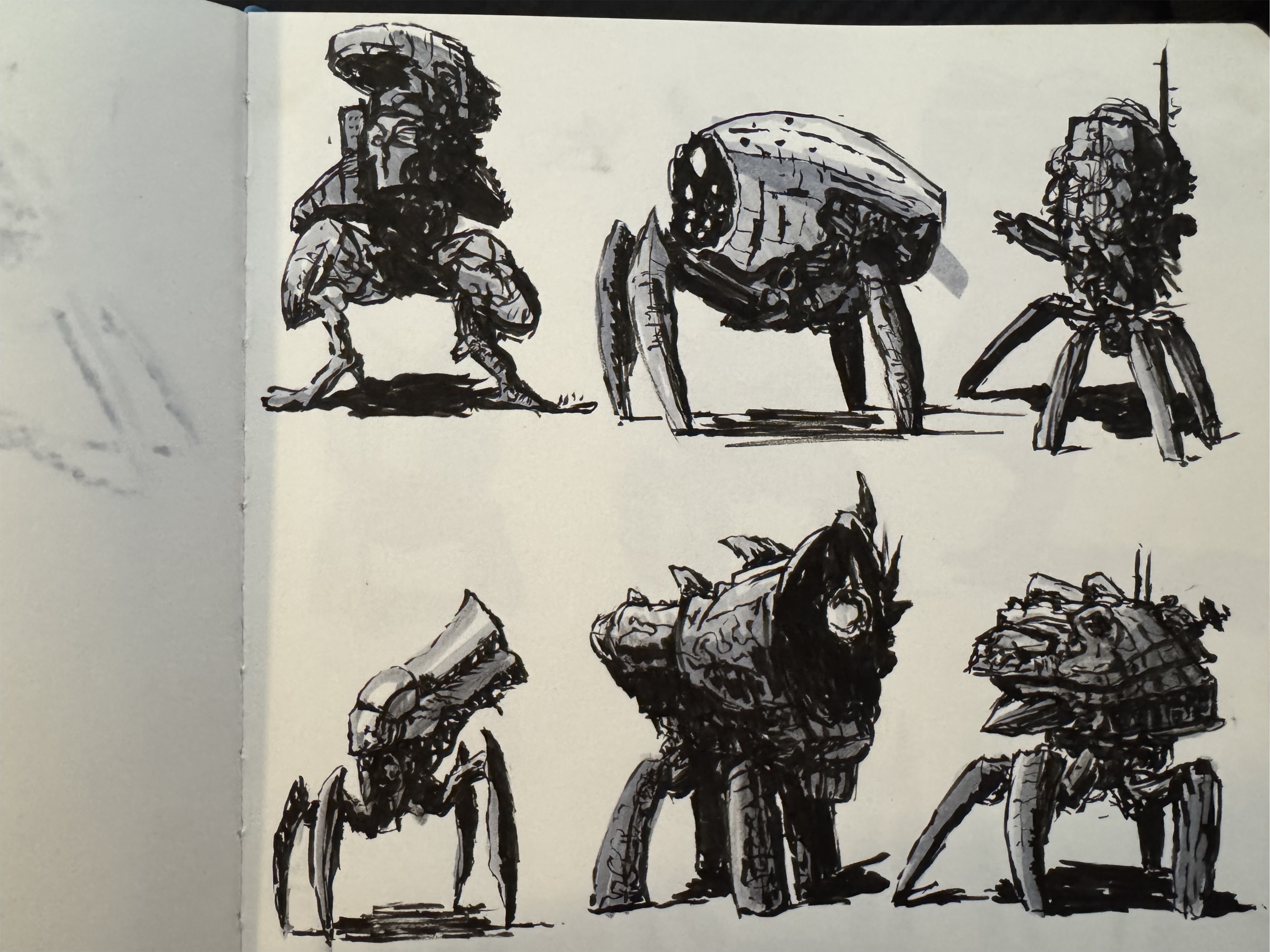
SKETCH
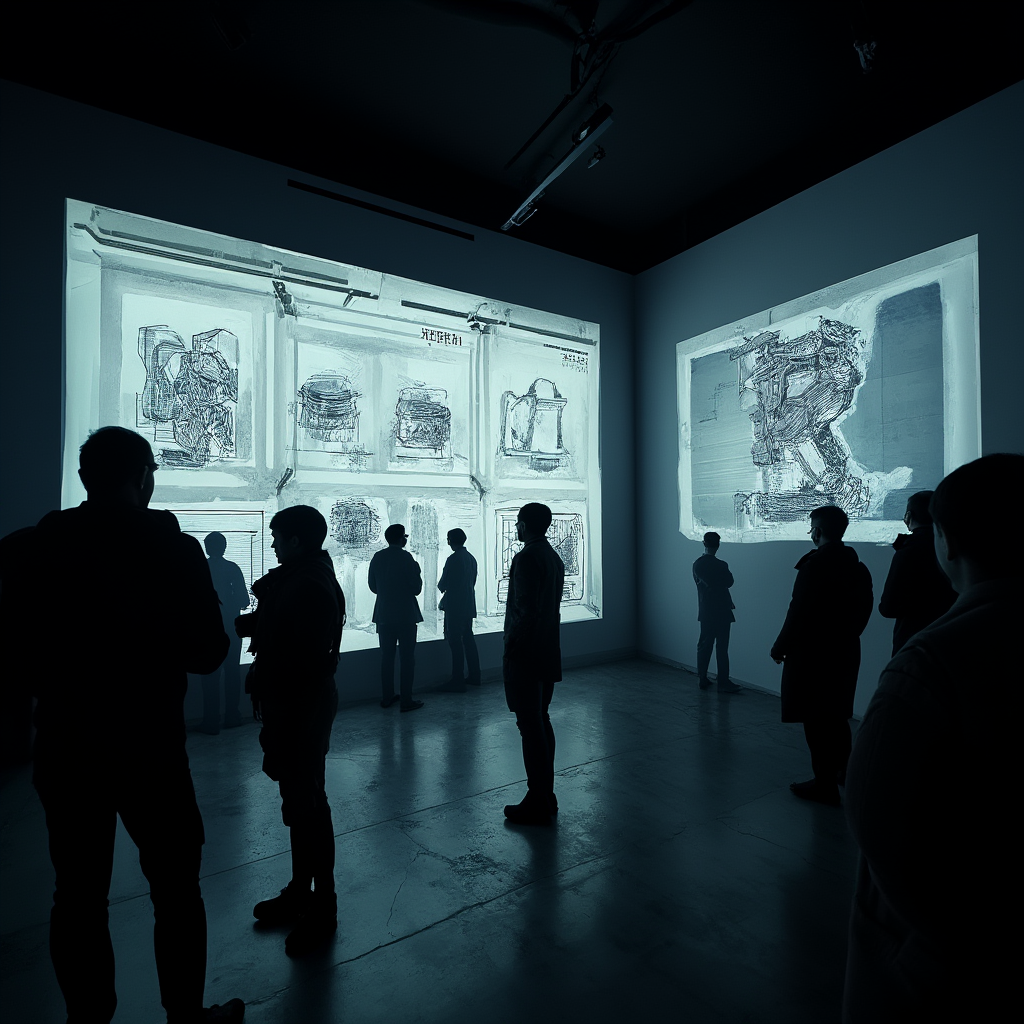
GENERATED - PROJECTION ROOM
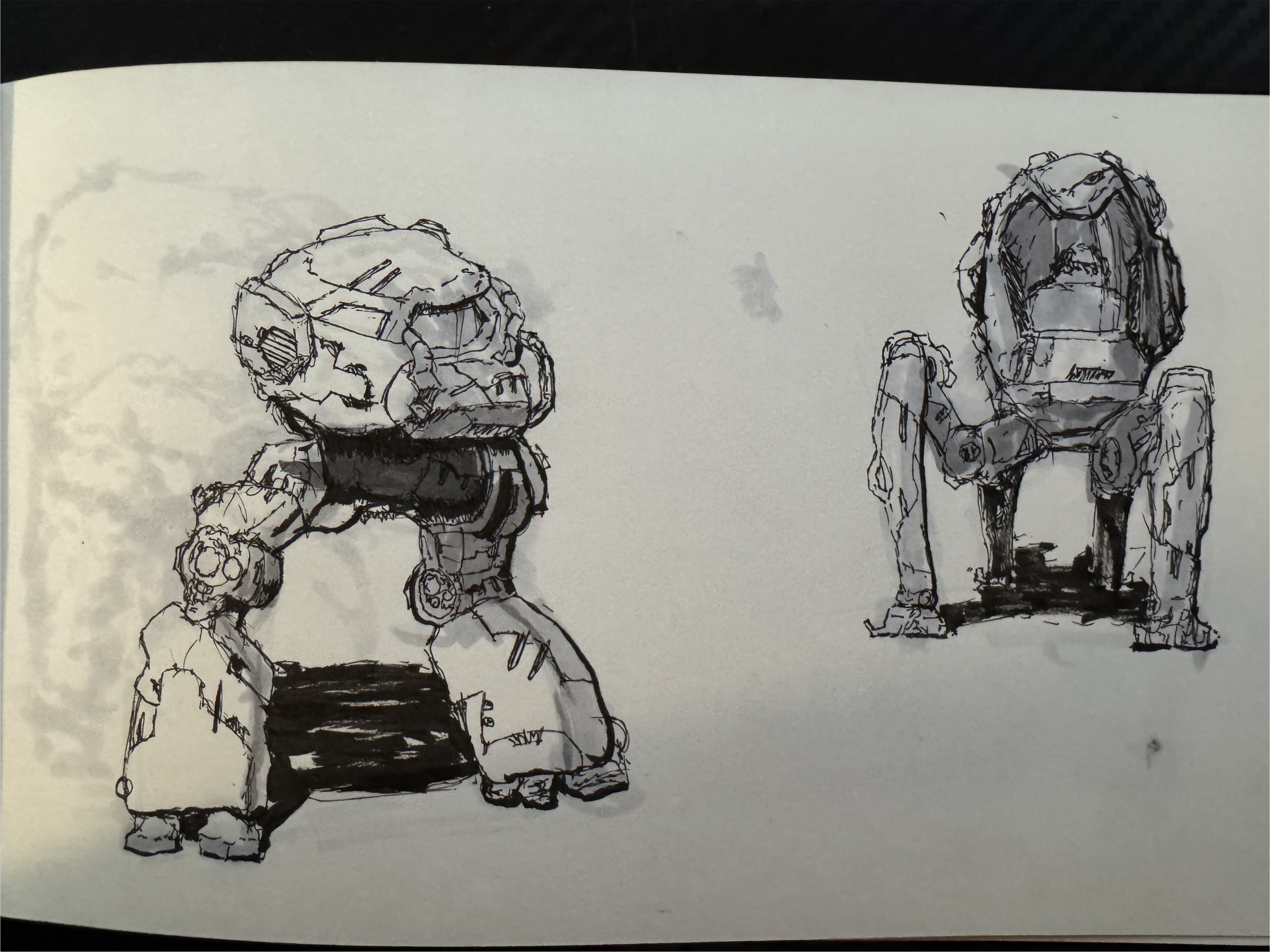
SKETCH
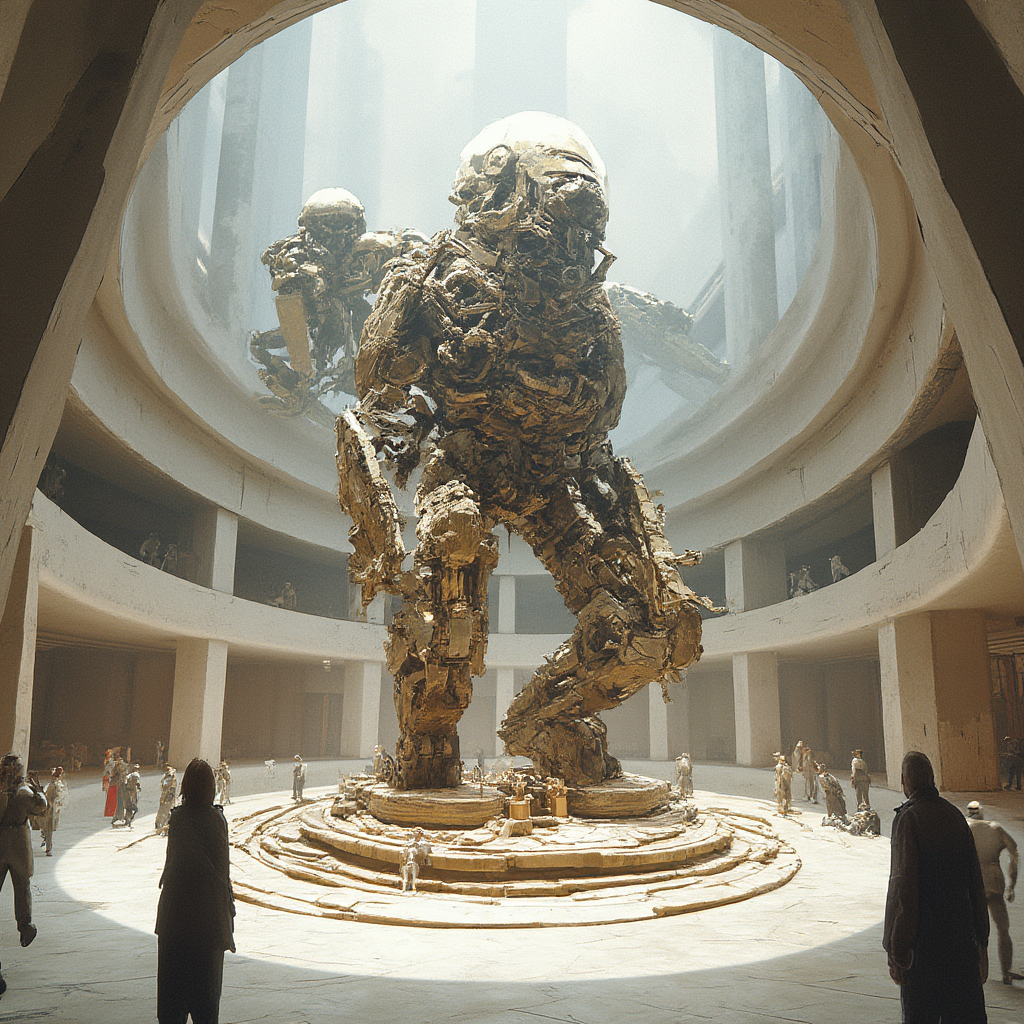
GENERATED - ROTUNDA CENTERPIECE
Panoramic Renders
HDR panoramic renders extracted from the Gaussian splats.
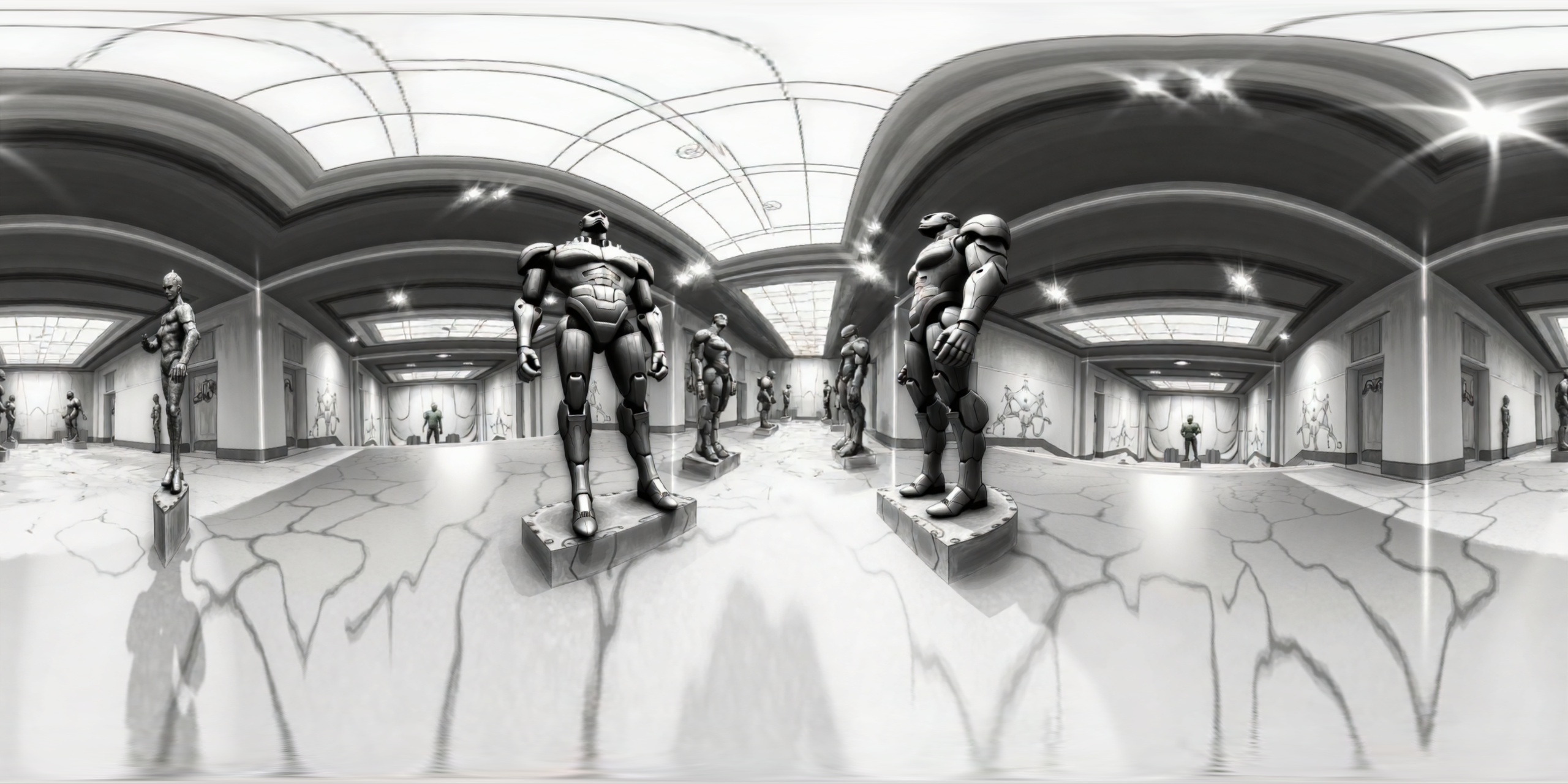
Sculpture Hall - Panoramic Render
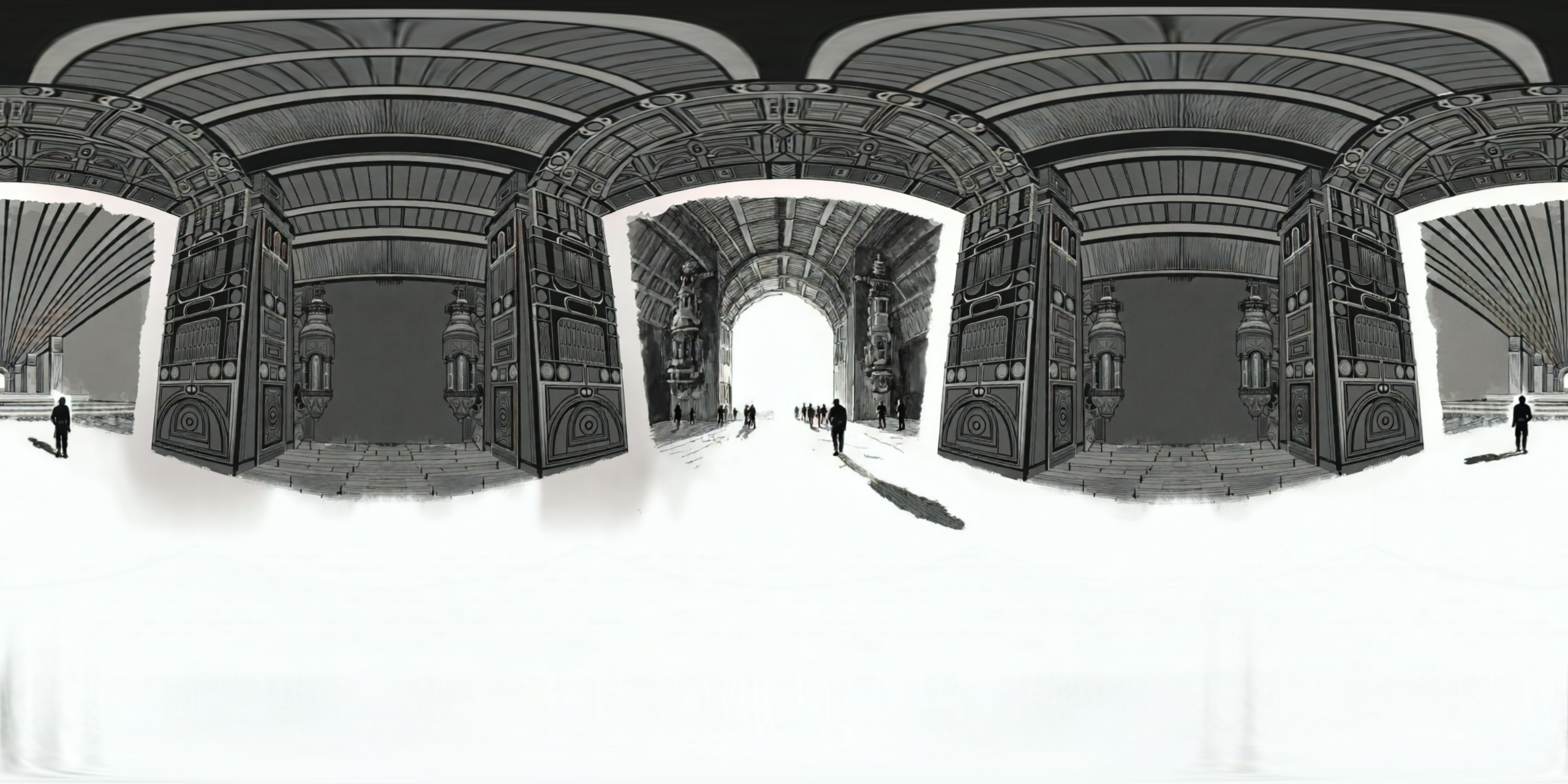
Grand Entrance - Panoramic Render
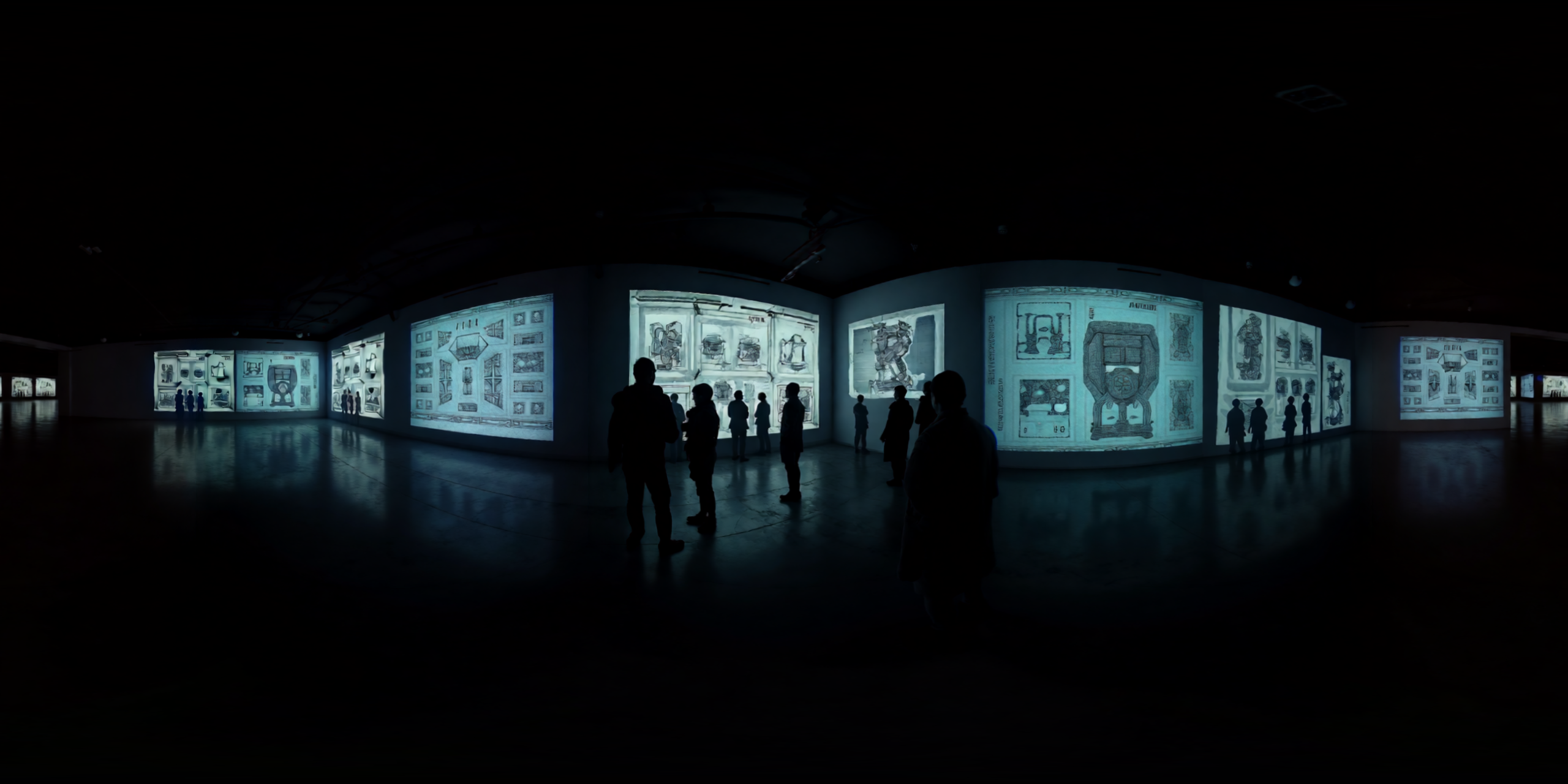
Projection Room - Panoramic Render
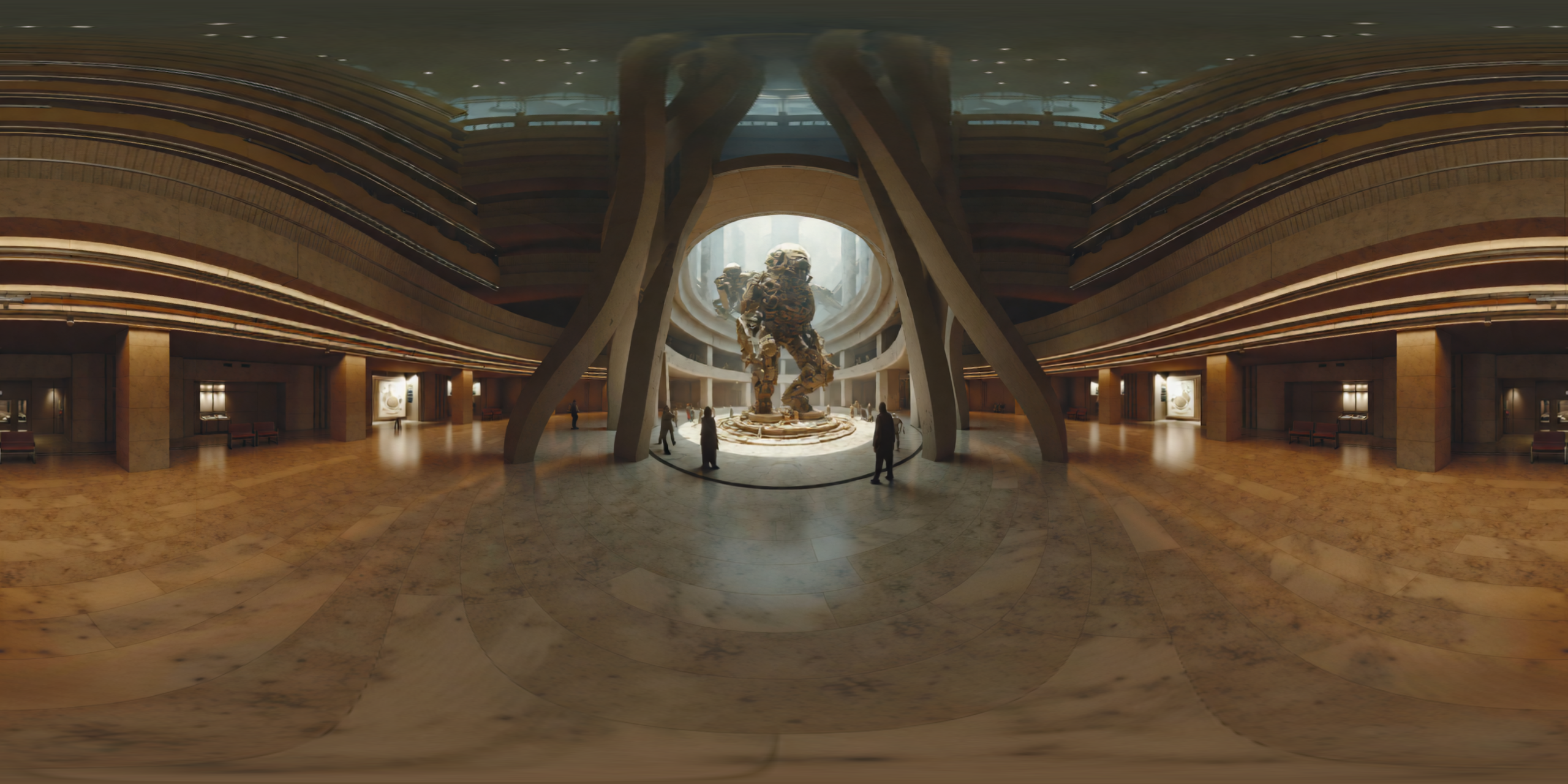
Rotunda Centerpiece - Panoramic Render
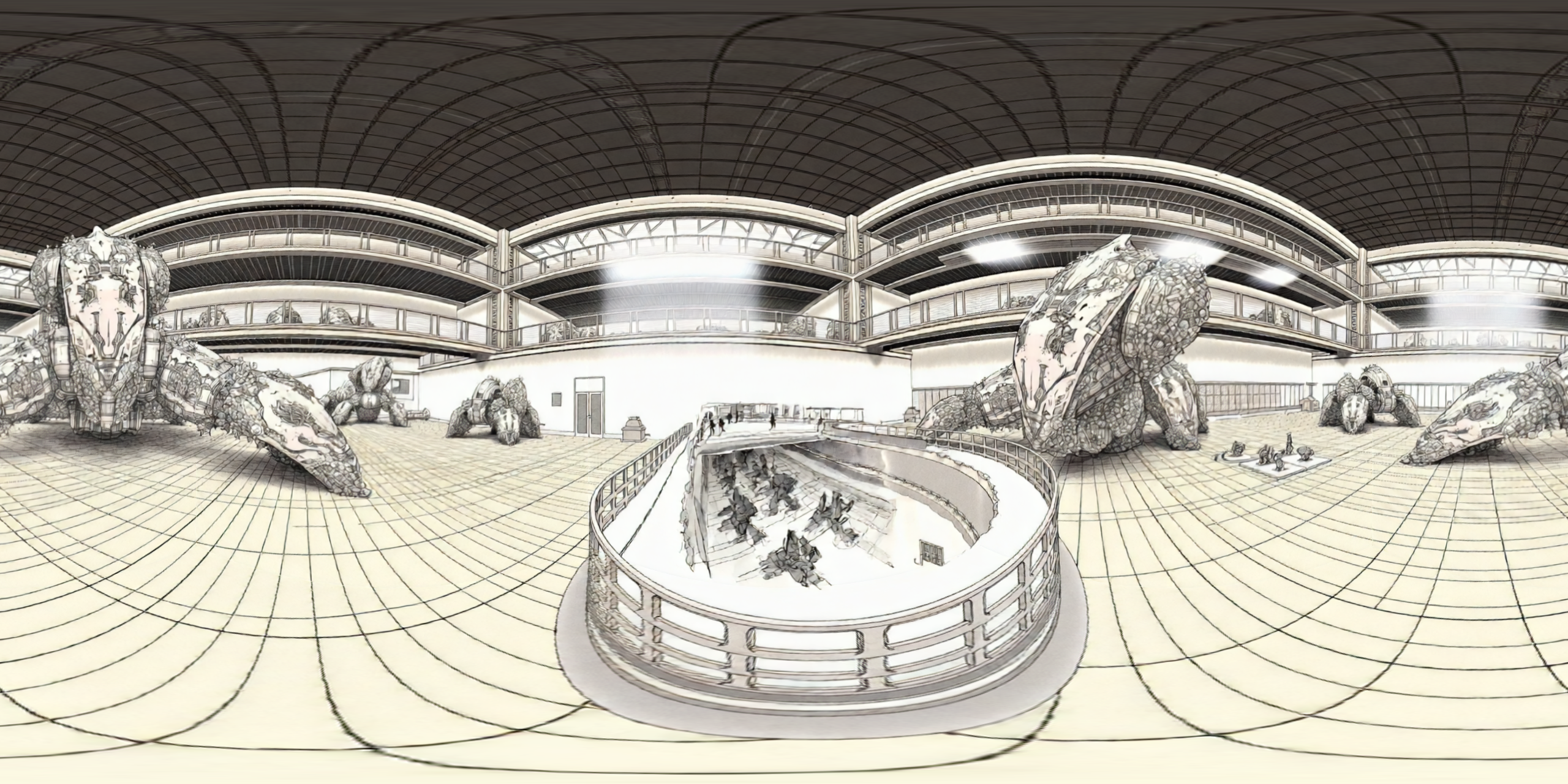
Observation Deck - Panoramic Render
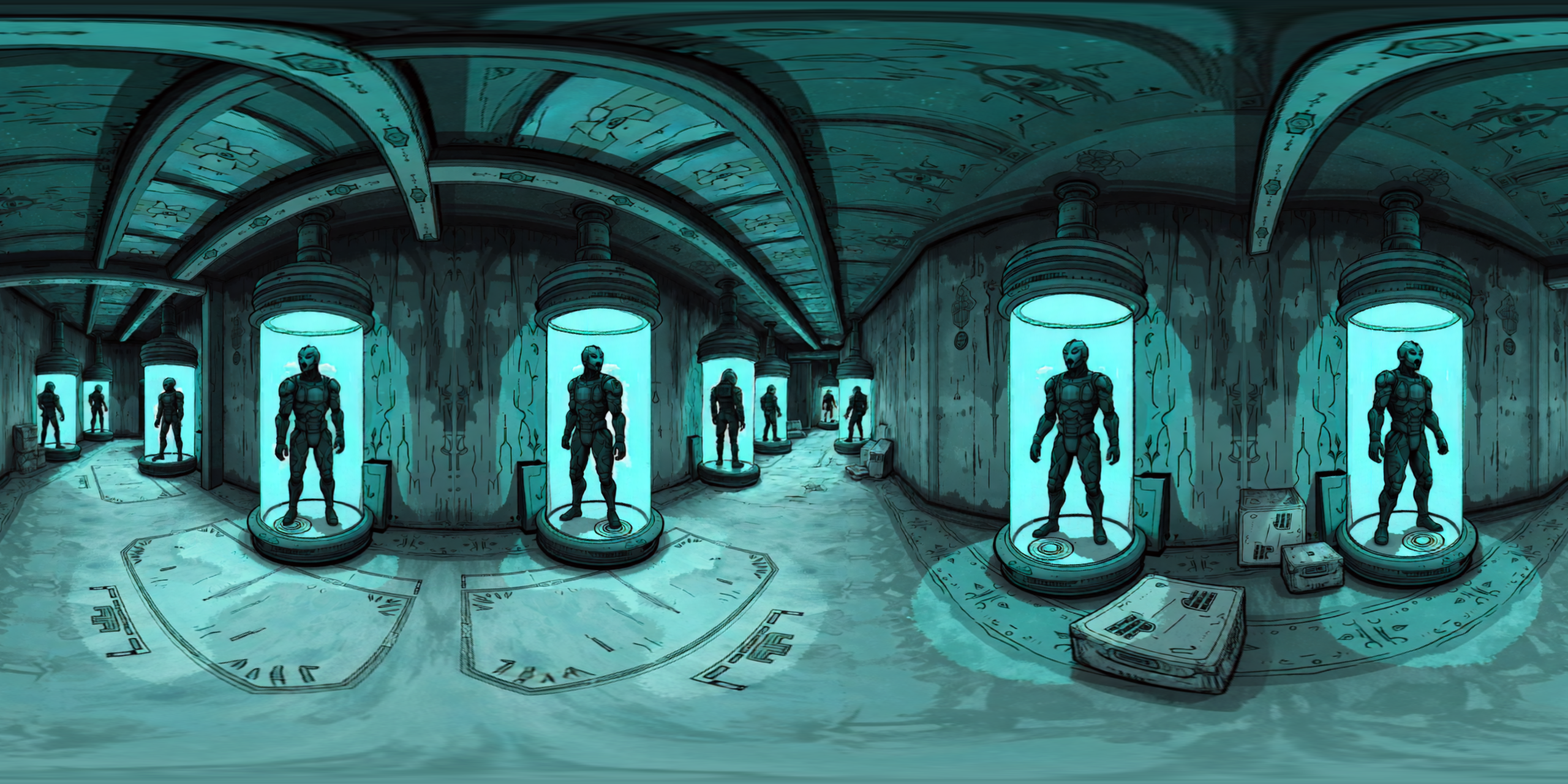
Underground Vault - Panoramic Render